The fog has an edge, and on the right morning you can stand on it. It comes in off water that barely leaves the low teens Celsius all summer, funnels through the one sea-level gap in the coastal hills, and usually dies somewhere over Golden Gate Park: one avenue grey and roaring with wind, the next warm enough to sit outside in shirtsleeves. Learn where that edge falls on the day you wake up here and San Francisco stops being the city that made you buy a fleece at the airport.
Why the city keeps two climates
The mechanism is simple, and knowing it is what lets you plan. Cold water sits offshore all year, dragged up from the deep by the prevailing north-westerlies. Air resting on that water condenses into a shallow marine layer. Inland, the valleys bake, that hot air rises, and something has to replace it, so the marine layer gets pulled east through the only low notch in a long stretch of coastal hills, the strait the bridge crosses. The mist arrives at sea level, meets the ridge that runs down the spine of the peninsula, and stalls on its western flank like water behind a dam. The avenues west of that ridge get the cold. The flatter, sheltered east side gets the sun.
Two consequences for a visitor. First, the gap is large enough to ruin or rescue an afternoon: the eastern side of town routinely runs 5 to 8°C (9 to 14°F) warmer than the beach at the same hour, and the ridge tops can be colder than either. Second, the line moves. Fog is thickest overnight and early morning, pulls back toward the coast through the early afternoon, and returns around dusk. June to August is its season, which blindsides people who booked a summer trip. September and October are the city's warmest, clearest weeks, so if you still have 2026 travel to book, autumn is the window.
So the day runs west to east. Be on the coast early, while the fog is in and theatrical. Climb something in the middle of the day, when the edge is visible and sharp. Finish east of the ridge, where the evening stays warm. Where you sleep matters more here than in most cities, too: if you are still choosing, work the San Francisco hotel search by area rather than by price alone, because a room out in the avenues is a cooler, quieter, foggier holiday than a room a few kilometres east.
Standing inside it on the cold side
Start at Lands End Trail & Sutro Baths (Outer Richmond), the best place to be physically inside the fog and watch more of it arrive off the water. It is free National Park land, open dawn to dusk, and the cliff path threads above the wrecked concrete tanks of the old bath house with the foghorns going underneath you. Walking groups and guided tours need no booking or permit, which makes it the easiest first stop for a party of any size. The car park at Point Lobos fills by mid-morning, so come early or come by bus. The Cliff House restaurant next door is still shut, with restoration now quoted at $25m and reopening targeted for late 2026, so carry coffee in rather than counting on it.
From there the coast runs south into Sunset Dunes (Outer Sunset), the most interesting new thing on this shoreline in a generation. The stretch of the Great Highway between Lincoln and Sloat became parkland on 12 April 2025, California's largest pedestrianisation: fifty acres of car-free asphalt, sand and planting, open 5am to midnight with no gate, which drew 1.7 million visits in its first year. There is no group limit because there is no door. Come on the N Judah tram or the 18 and 7 buses rather than driving, because street parking around it is thin and residential. Proposition G on the November 2026 ballot would let weekday cars back onto part of it, so the park you walk may not be the park a 2027 guide describes.
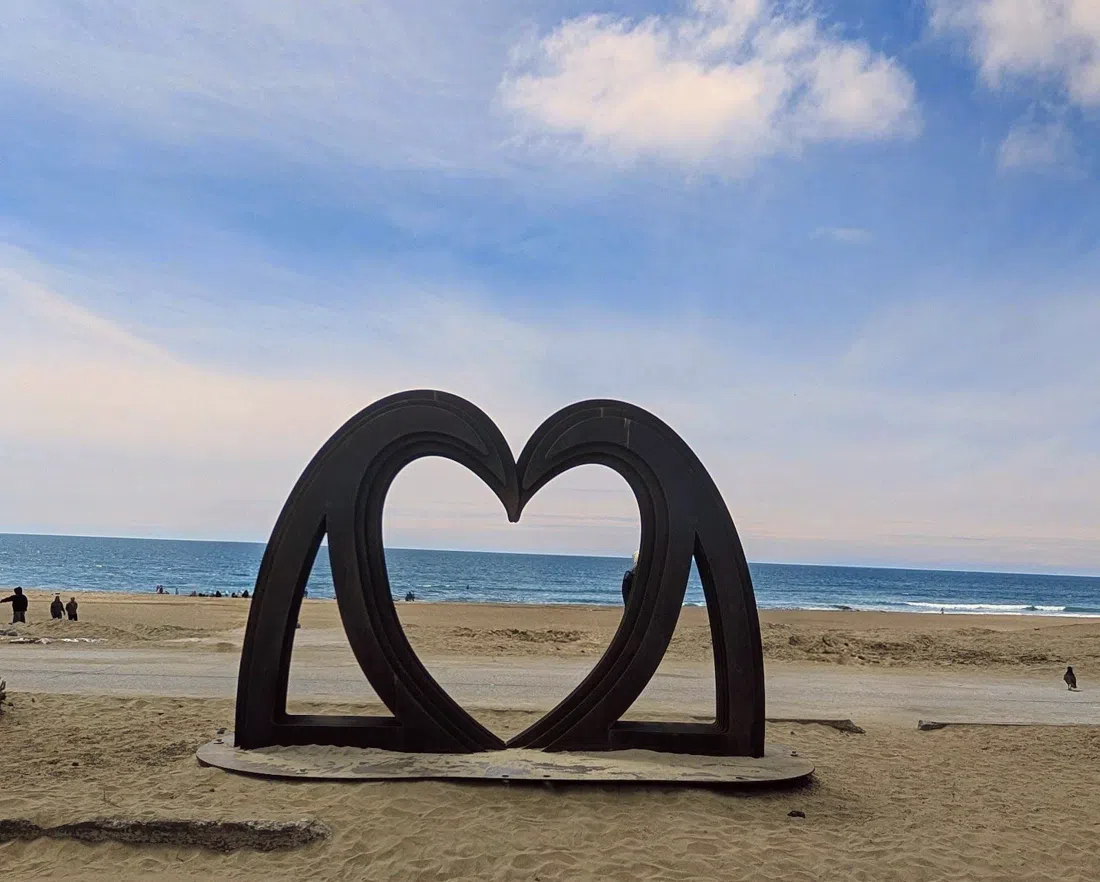
South again to Fort Funston (Lake Merced, the city's south-western corner), where fog becomes weather you can read rather than just endure. It is free and open around the clock, and the hang-gliding launch sits on a bluff above the beach where the same sea breeze that drags mist inland gets worked by pilots for lift. The wheelchair-accessible viewing deck is metres from the launch ramp, so a mixed-mobility group can watch the whole business without permits or scrambling. Flying here is club pilots only, rated H3 and operating under Fellow Feathers, and nobody sells tandem rides. You come to watch. March and October are the strongest flying months, which makes an autumn visit doubly worthwhile.
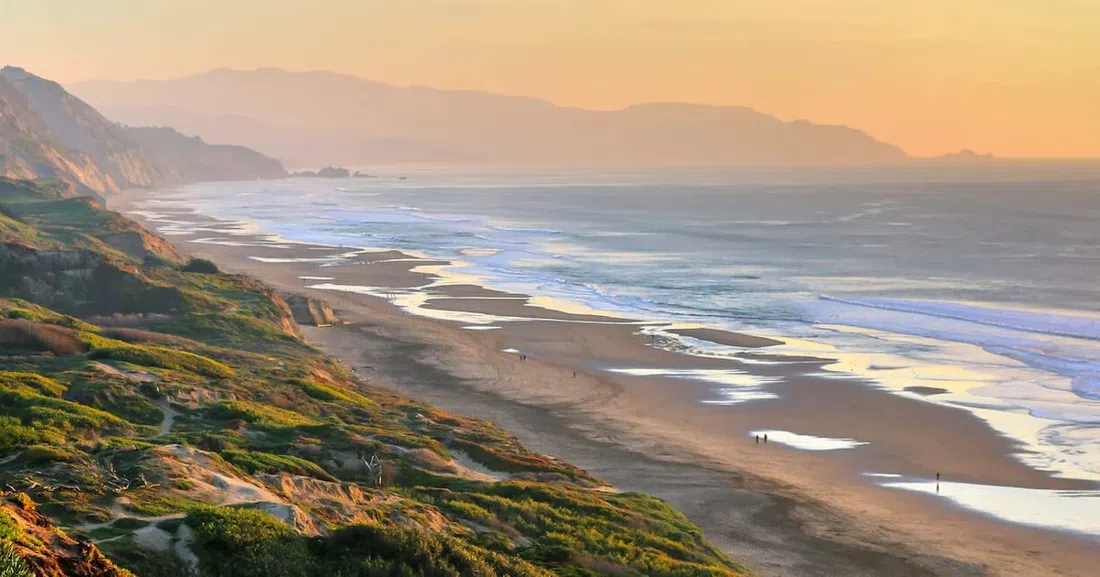
Where to warm up without leaving the cold side
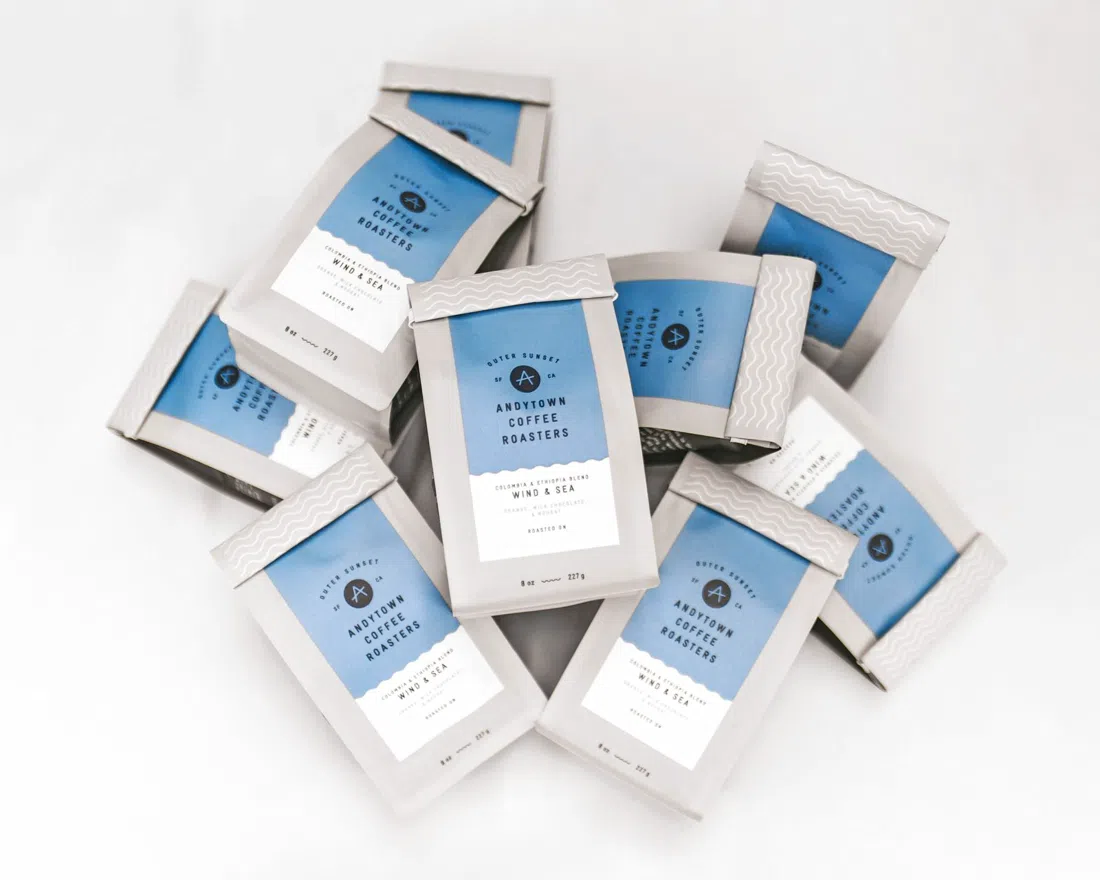
The Outer Sunset is the most pleasant place in the city to be cold, because it has built itself around the problem. Andytown Coffee Roasters (Outer Sunset) is the standard warm-up: counter service, open daily 7am to 5pm, founded in 2014 by two baristas on a then-shuttered block. The Snowy Plover is the drink the city queues for. There is almost no seating, so a group orders and walks, and the kiosk at 800 Great Highway is the one you want, since it sits on the park side rather than inland.
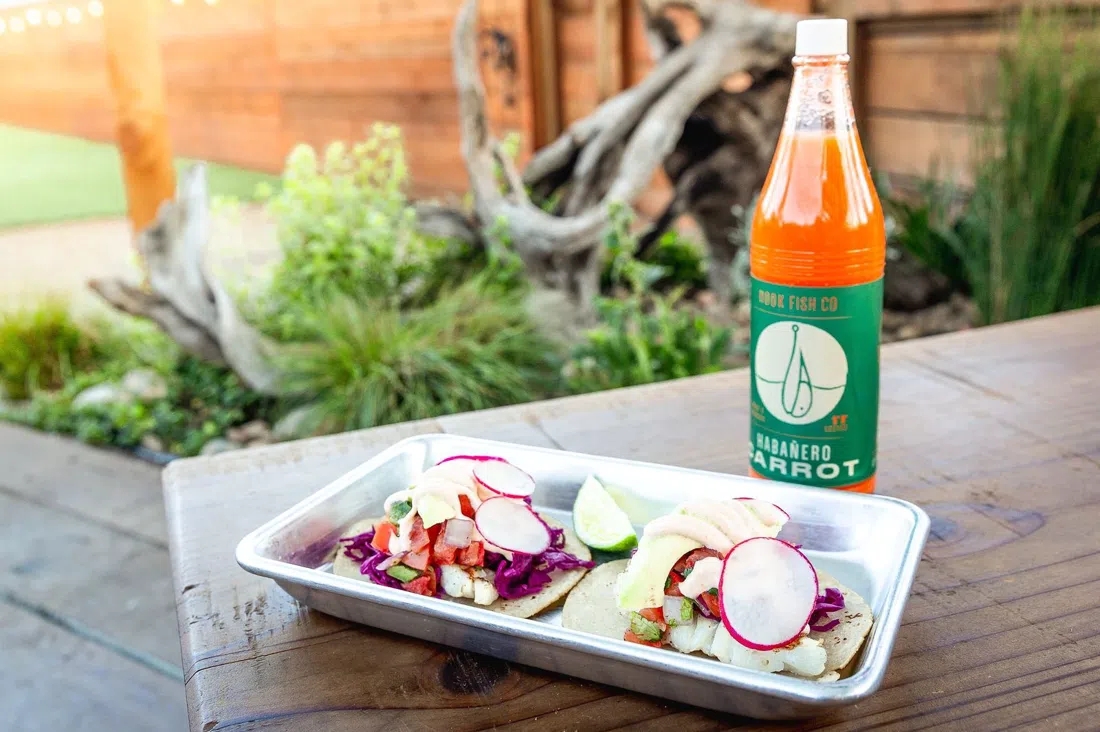
For lunch, Hook Fish Co. (Outer Sunset) does day-boat fish with no ceremony at $15 to $25 a head, open daily 11:30am to 9pm. Order at the counter. The room is small with a bench out front, so six to eight people works if you eat outside or carry it over to the dunes. It doubles as a fishmonger, which is useful if your rental has a kitchen.
Dinner on this side belongs to Outerlands (Outer Sunset), a Michelin Guide listing that has anchored the block since 2009 and is still the warmest room on the cold side of the line. It is one small space, fine for four to six and impossible for a coach party, and you book ahead for dinner nightly or weekend brunch from 9:30am. Mains run roughly $20 to $38. When the mist is in, order the soup and grilled cheese. It is what the weather asks for.
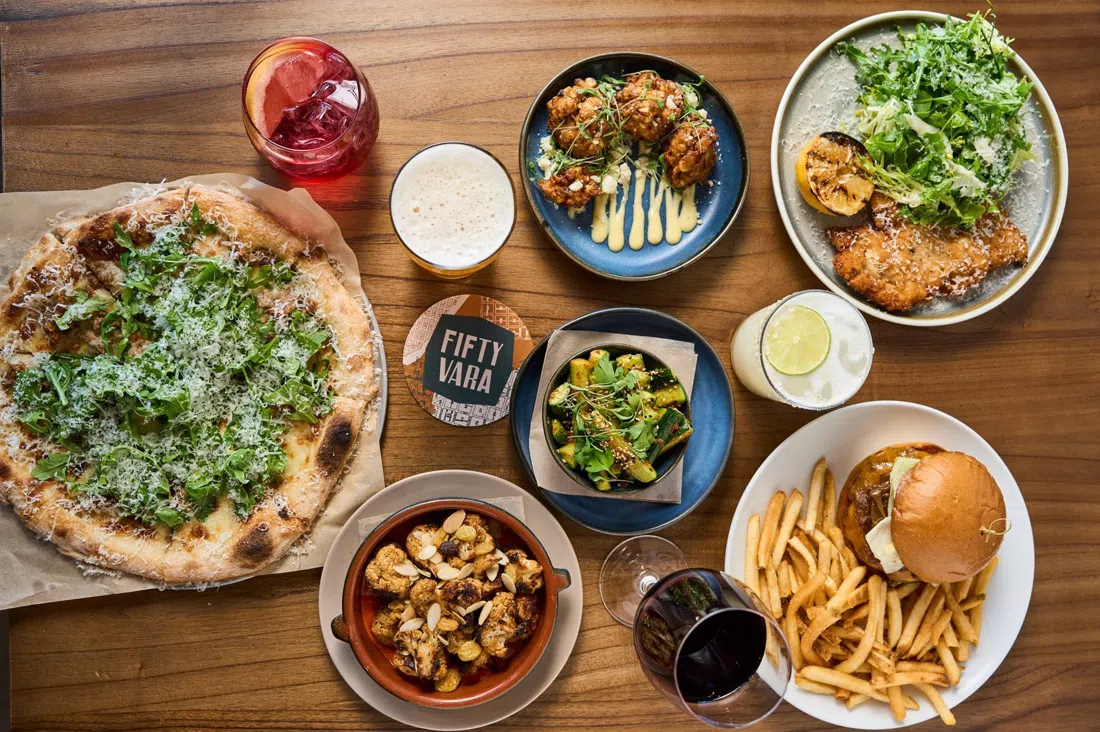
For a group that wants a long evening rather than a reservation squeeze, Fifty Vara (Outer Sunset) is the answer. It opened in spring 2025 in the old Sunset Reservoir Brewing space, which had closed in August 2024, and it is now the area's only full brewpub with a proper cocktail bar attached. The main room plus mezzanine and private bar take up to 125, parties of ten are routine, and you book through their own site or OpenTable.
The most group-friendly room on the whole coast is Beach Chalet & Park Chalet (Ocean Beach, at the western end of Golden Gate Park): one building with two climates. The ocean-facing side is where you sit when the fog is in, and the garden side is where everyone moves the moment it lifts. Beach Chalet takes bookings for parties of 13 or more, the Park Chalet garden seats 20 to 65 and stretches to about 150 for a standing reception, and there is live music most weekends. It is marking three decades here through 2026.
Three cheap instruments for finding the line
You do not need an app. You need altitude and a view west, and the city gives you three for nothing.
The most comfortable is the Hamon Observation Tower at the de Young Museum (Golden Gate Park). Free, no ticket needed, open Tuesday to Sunday 9:30am to 4:30pm with last entry at 4:30pm, and reached by lift, which makes it the one fog-line viewpoint any group or mixed-mobility party can use without discussion. From the glass box you look straight down the park and can usually see the precise avenue where the mist gives up.
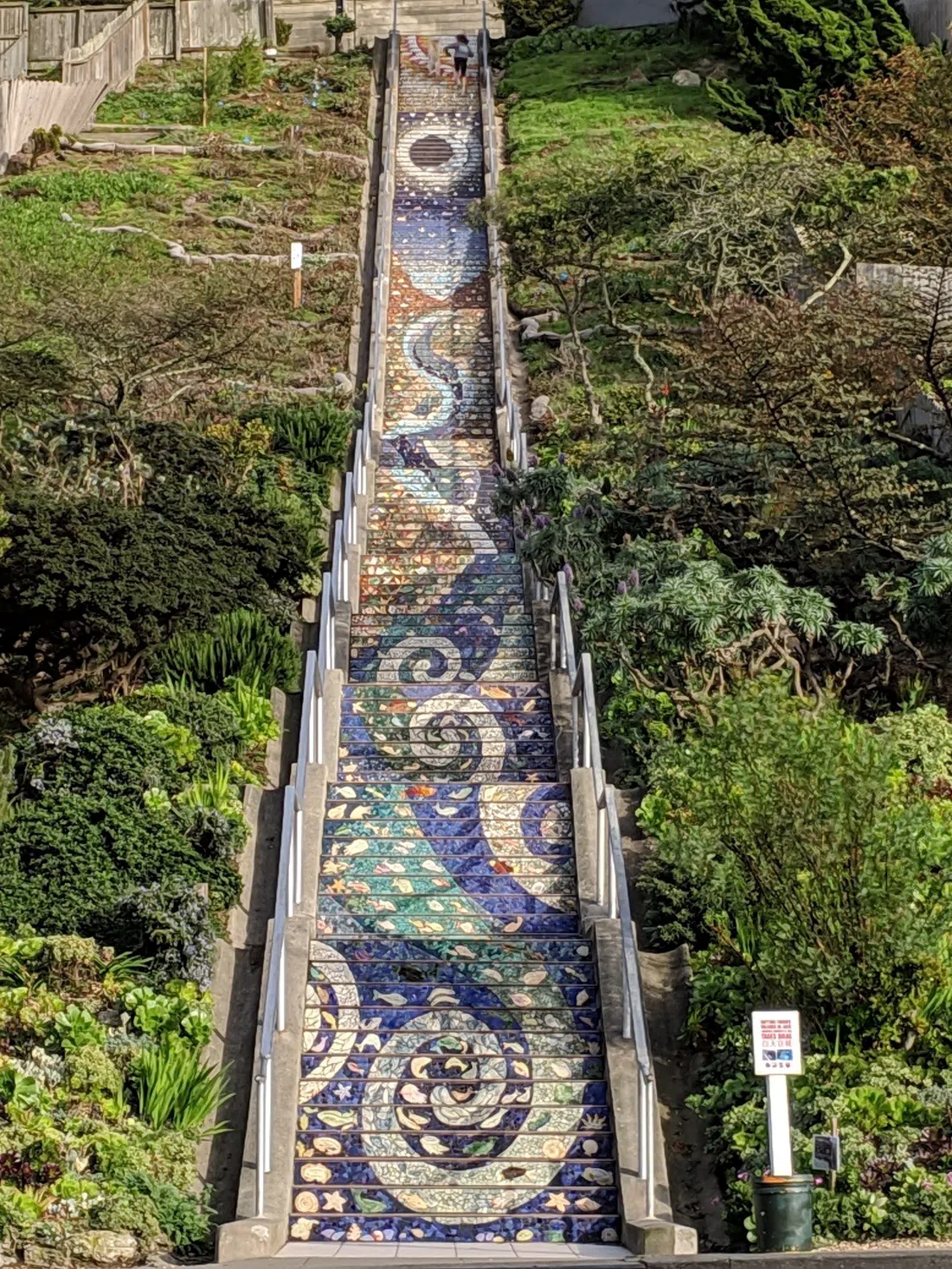
The best value is Grand View Park & the 16th Avenue Tiled Steps (Golden Gate Heights, above the Inner Sunset). Free, 5am to midnight, and a 160-step mosaic staircase that works as an altimeter: you start in grey and often break into sunshine at the top. It is also someone's doorstep, a residential street with no facilities, steep and not accessible, so keep groups small and voices down.
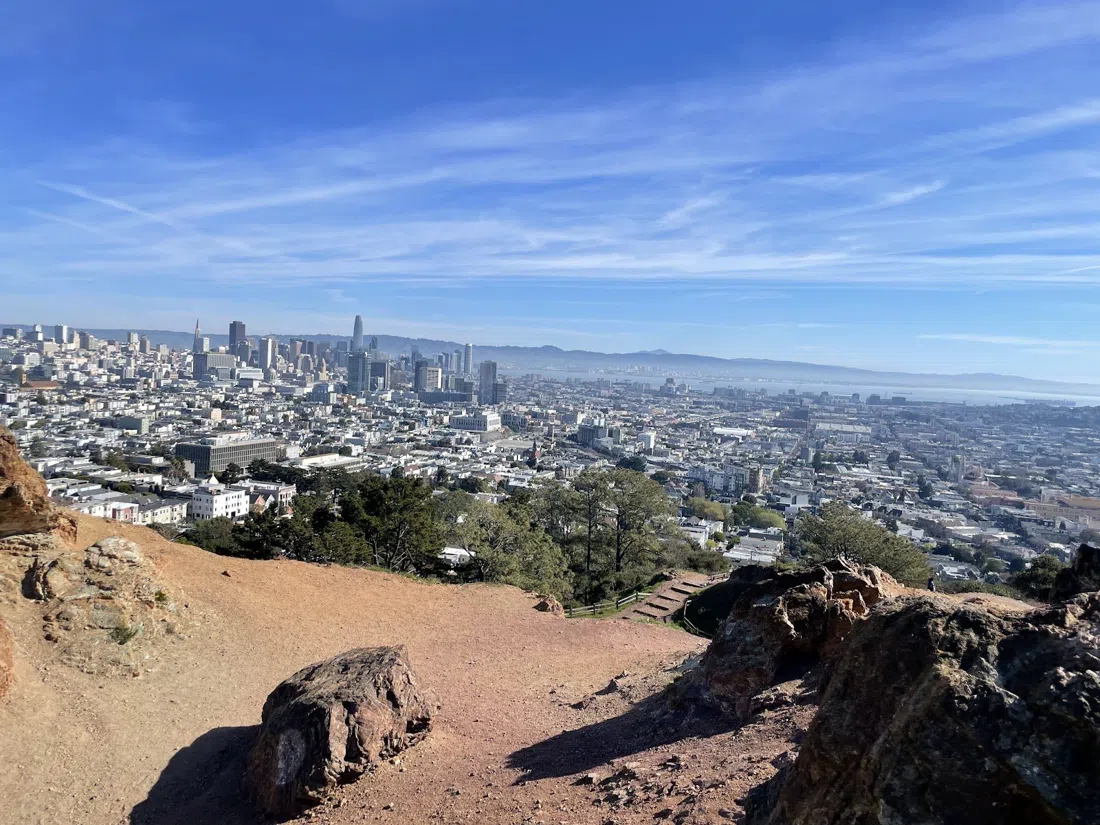
The clearest view of the border itself is from Corona Heights Park (Castro). The park is free and always open, and from the bare rock at the top you watch the mist roll up to the ridge, stall, and dissolve. On most days that is the eastern limit of the fog, visible as an actual frontier. The Randall Museum on the same site is free, open Tuesday to Saturday 10am to 5pm, and handles school-sized groups if you book ahead.
The ridge where the fog gives up
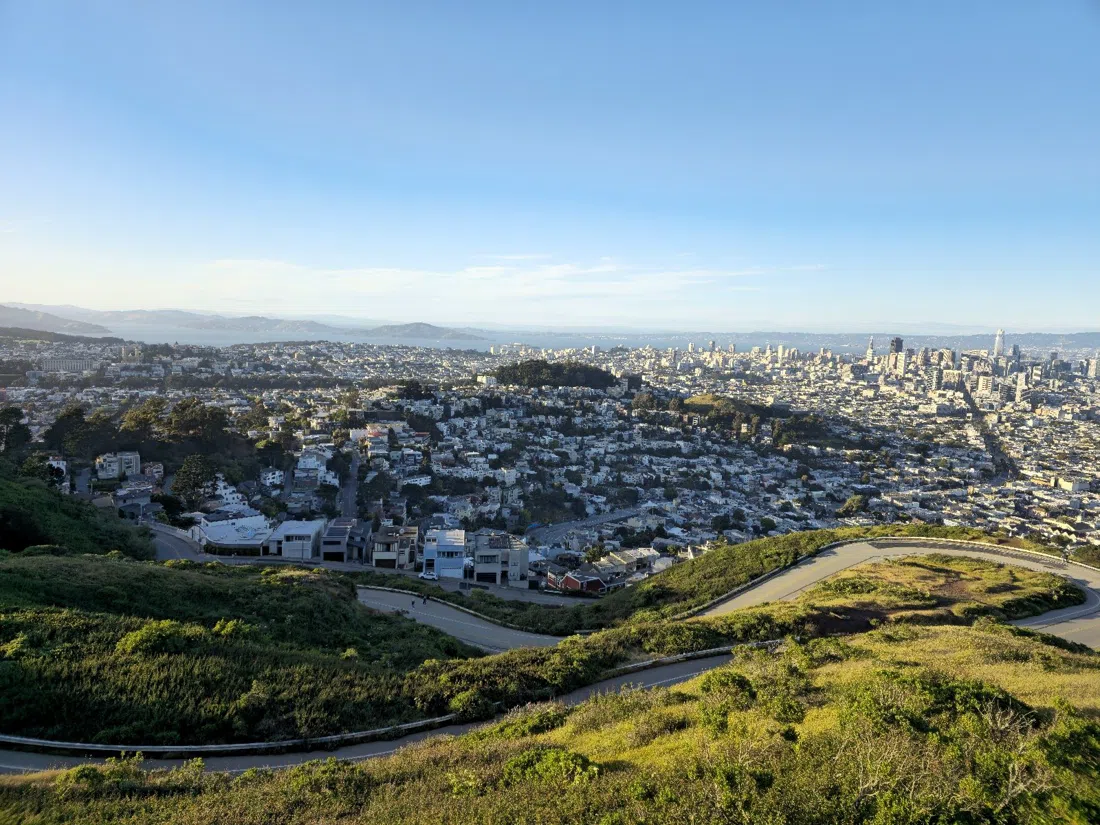
Twin Peaks (Christmas Tree Point) is the divide. Stand on the saddle on a working fog day and one cheek is genuinely colder than the other. It is free and unticketed with a large car park, so coaches and big groups do come, but the access rules catch people out: cars reach Christmas Tree Point via the Portola Drive gate noon to midnight only, the Burnett Avenue gate is permanently car-free and open to walkers and cyclists at all hours, and the Clarendon approach has been closed to cars since 2020. Decide which gate you are aiming for before you set off, and dress for about 10°C (20°F) less than downtown. The wind here is the whole point and it does not care what the forecast said.
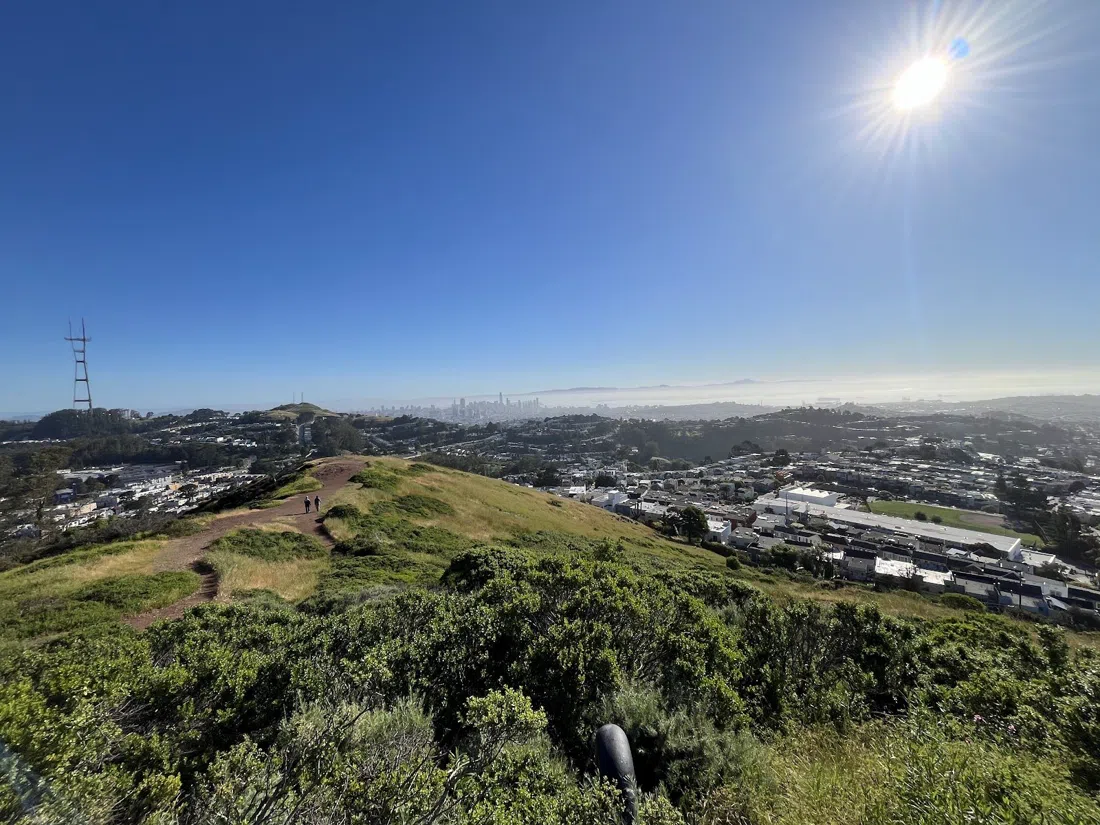
Mount Davidson (Sherwood Forest, south-central) is the quieter call, and in some ways the better one, because it is the one place where the fog is the attraction rather than the obstacle. It is the city's highest ground at a little over 280 metres, free open parkland, roughly an hour round trip through a dense eucalyptus wood that strips the moisture out of the passing air and drips it on you. The summit goes silent in a way nowhere else in San Francisco does. Trails are rooty, steep and unlit, fine for a walking group but strictly a daylight outing.
Crossing the line at sea level
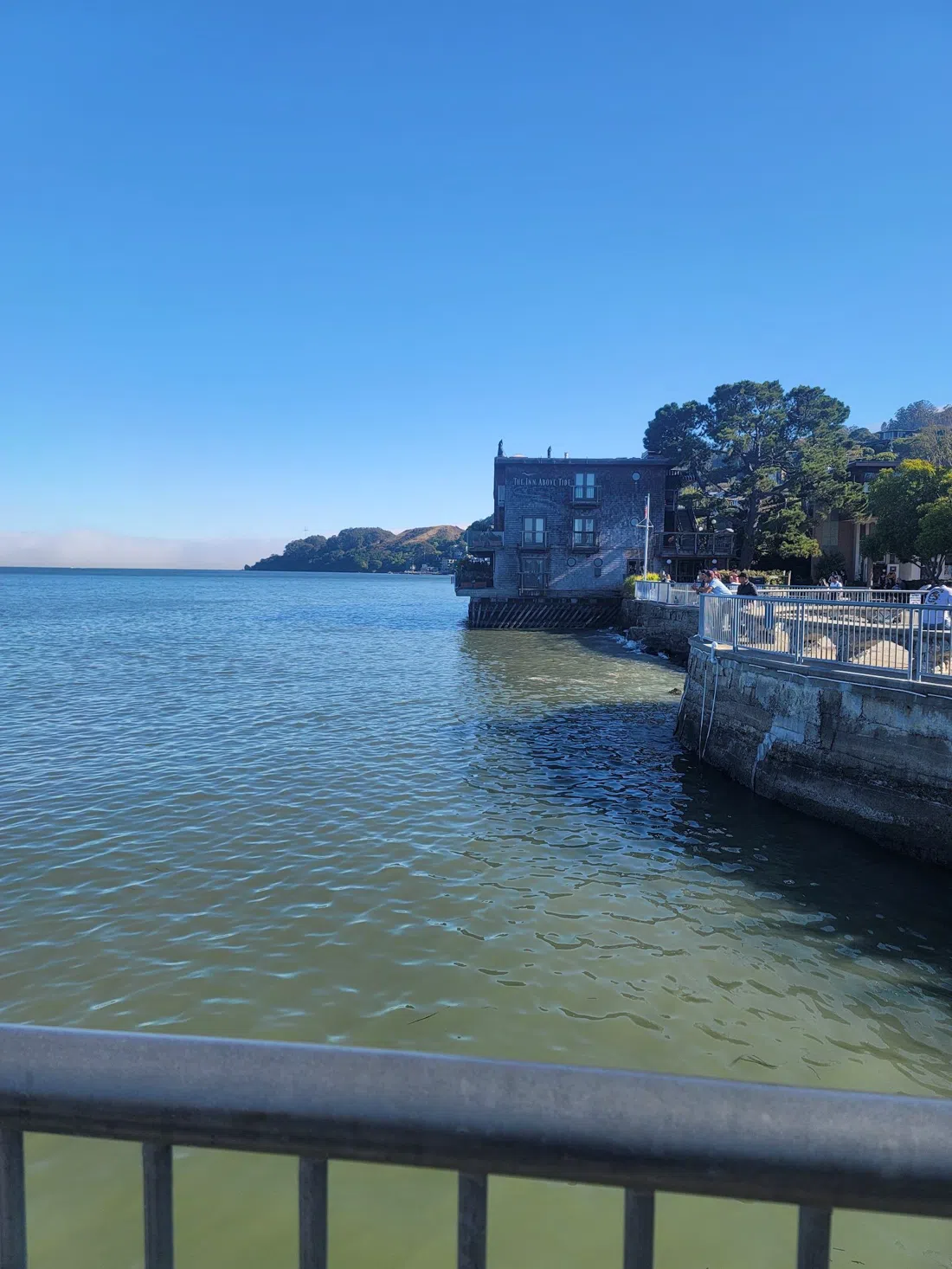
The ridge shows you the border. The water lets you cross it and feel it. The Golden Gate Ferry — Sausalito route takes you out through the gap the fog uses, and the temperature drop as you pass under the bridge happens in minutes rather than hours. As of 1 July 2026 it is $14 adult cash or $9.50 with a Clipper card each way; groups of 20 or more get a discounted fare of around $8.50 if booked 21 days ahead, and everyone else just taps on. Schedules changed on 13 April 2026, so check the current timetable rather than trusting an older guide or a screenshot.
On the far headland, Hawk Hill, Marin Headlands gives the one view that beats Twin Peaks: the classic above-the-fog shot, with the bridge towers standing out of a white sheet. It is free, and it has reopened after about a year of works with a new zigzag summit loop, a second trail up from the Conzelman Road tunnel, accessible parking and proper vault toilets, so it now handles groups far better than it used to. The approach is the catch. Conzelman Road is one-way, narrow and tight for parking, so arrive early and do not bring anything long. In autumn the hill doubles up, because the Golden Gate Raptor Observatory's migration counts run over the same ridge the thermals use.
The sunny side and the end of the day
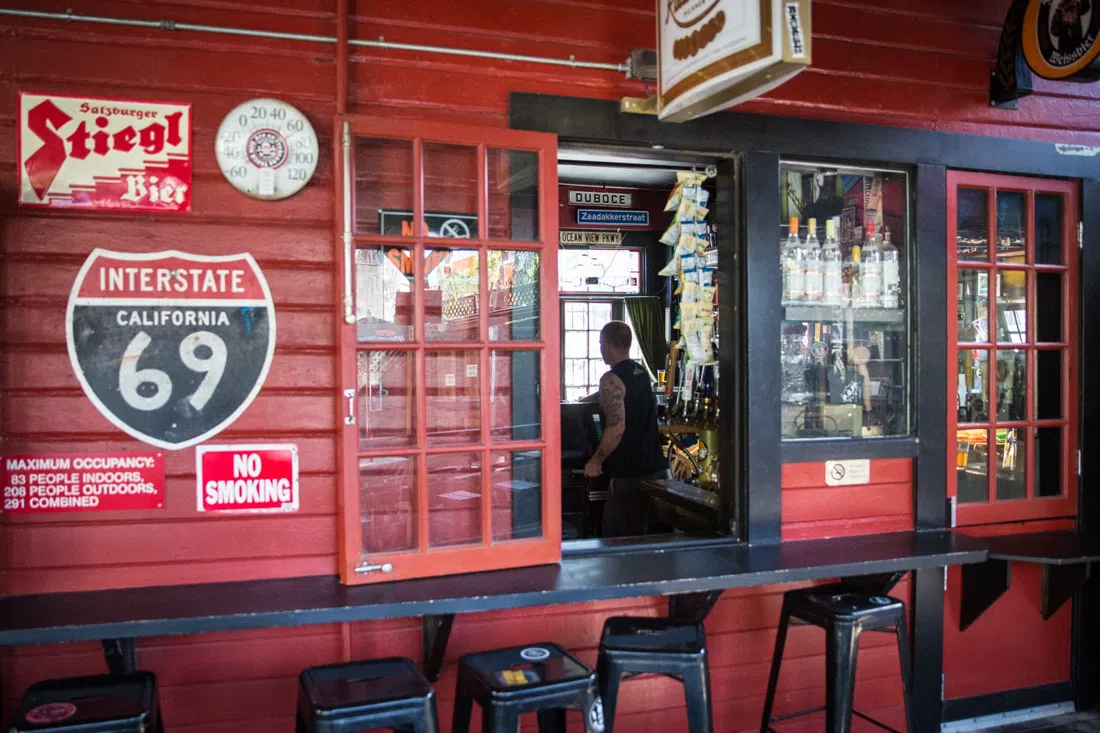
Finish east, where the trip pays you back. Zeitgeist (Mission) is the obvious last stop: a big yard of picnic tables where sharing with strangers is the norm, the Mission's eastern microclimate holding 5 to 8°C warmer than Ocean Beach on the same evening, and a 50th birthday coming next year. The door is strict, though. It is 21 and over, no dogs, and tables are first come, first served, which means a party of eight at 6pm on a Saturday will be standing. Larger groups can arrange something in advance by emailing [email protected]. It is where you end a cold-side day in order to feel the difference in your hands.
Practical notes
Get a Clipper card or set up the equivalent on your phone before your first ride. It cuts the ferry fare from $14 to $9.50 and removes all fumbling on Muni. The N Judah tram plus the 18 and 7 buses cover the whole cold-side itinerary, and the 18 is the one that links the coast to Fort Funston. Driving is the weak option on the west side: the Point Lobos car park fills by mid-morning, the Twin Peaks gates have hours, and the Marin Headlands road is narrow and one-way.
Almost nothing here needs cash, but the ferry's cash fare is higher than the card fare, and Zeitgeist's yard moves faster if you are not splitting a bill eight ways.
Be on the coast at 8 to 10am for fog at its most dramatic, take a viewpoint stop late morning, climb the ridge around midday to early afternoon when the edge is sharpest, and move east from late afternoon. September and October give the clearest air. June to August gives the thickest fog, which is better theatre and worse sunbathing.
The entire spine of this day is free: Lands End, Sunset Dunes, Fort Funston, Grand View Park, Mount Davidson, Twin Peaks, Corona Heights, the Hamon Tower, Hawk Hill. Realistically you spend $5 on coffee, $15 to $25 on lunch, $19 to $28 on the return ferry, and whatever dinner you choose, from a $20 plate to a long table at the brewpub. A couple can do the whole thing properly for well under $100 a head, and a group of ten can do it for the price of the food.
For what to pair it with on the rest of your stay, the wider San Francisco guide covers the city either side of the line. But do this one first. Nothing else explains the place as quickly.