Stand on Montgomery Street at Clay and you are standing in the bay. In 1849 this was open water, deep enough to float a square-rigger, and within two years it was a logjam of several hundred abandoned ships whose crews had walked off the moment they smelled gold. The city never cleared them out. It filled in around them, built over them, and the hulls are still down there under the office blocks.
That is the walk. It is more a lesson in where the ground came from than a museum trail: which streets are old piers, which building sits on which ship, where you can drink inside a hull, and out at the city's edges, where the vessels that never made it into the harbour still show themselves at low water. It is flat, mostly free, and comfortably one long afternoon. If you want the wider San Francisco guide for everything beyond the waterline, it's there; this piece stays on the old shore.
Where the water used to be
Start in the redwoods. Transamerica Redwood Park & Transamerica Pyramid Center (Financial District, on the Jackson Square edge) is a half-acre grove of coast redwoods tucked behind the pyramid, reopened to the public in September 2024 after a long renovation. It is free, open daily, needs no ticket, and walking groups are genuinely welcome; it functions as a public park again rather than a corporate courtyard. There are benches, a fountain and enough shade that it stays cool on the two or three warm weeks this city gets.
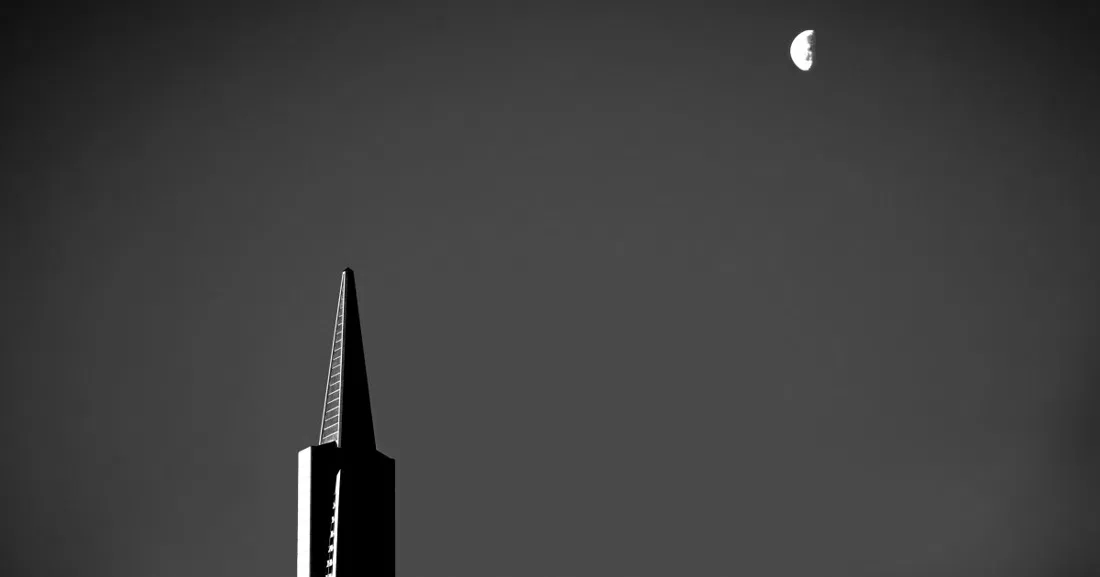
Get your bearings here, because you are roughly on the 1849 shoreline. Everything east of the grove, all the way out to the Embarcadero, is made ground: sand quarried off the hills, ship ballast, fire rubble, and ships themselves. One of those is the Niantic, a whaler run aground in 1849 at what was then the water's edge, roofed over and operated as a hotel while the hull sat in the mud, and dug up again in 1978 when the block was redeveloped. It lies metres from the trees. Between noon and one the benches fill with office workers; arrive at ten or after three and you will have the place almost to yourself.
Four minutes' walk away is the Museum of San Francisco (San Francisco Historical Society) (Commercial Street, Financial District). Entry is free but requires a free ticket, and it opens Thursday to Saturday only, 10 to 16, which is the detail that catches people out. Free docent tours run every Saturday at 11:30 and 13:30. Groups should email ahead rather than arrive hopeful.
Two things make it the right second stop rather than a generic city museum. It stands on the site of the West's first branch mint, built specifically to melt the gold those ships were hauling in. And Commercial Street itself is the filled-in Long Wharf, the pier that once ran out into open water. You are walking the length of a wharf, on dry land, indoors. Once you have seen that on a map, the street grid around you stops being a grid and starts being a diagram of a vanished harbour.
A saloon built inside a wreck
The Old Ship Saloon (Pacific Avenue, Jackson Square) is the story at its most literal. The Arkansas struck the rocks off Alcatraz in a gale in December 1849, was floated across and grounded at the foot of Pacific, and by 1851 somebody had cut a door into the hull and was selling drinks through it. The bar has been rebuilt and shuffled since, and nobody is pretending the panelling is original timber, but the keel was rediscovered twenty-five feet down in 2016 during foundation work for the condo building next door. That is the point: the ship is not a legend, it is a documented obstruction that construction crews have to work around.
It is a walk-in pub with no door policy, it takes large groups, and it does private buyouts. Pints run around $9, cocktails around $16, bar food around $20. Heritage happy hours and history walks regularly finish here, so a weekday early evening can go from six people to forty in five minutes. Couples wanting to actually talk should aim for 16:00 to 17:30, or late. Groups should do the opposite and arrive with the crowd, because the staff are used to it.
The other drink on this theme means crossing the water. Heinold's First and Last Chance Saloon (the estuary waterfront on the far side of the bay, reachable by ferry from the Embarcadero) was built in 1883 out of the cabin timbers of a scrapped whaler, and it is the closest thing anywhere on this estuary to drinking inside a ship. The floor slopes hard, a legacy of the 1906 earthquake, the gas lamps are still there, and Jack London's actual desk sits by the window. Beers are $7 to $9.
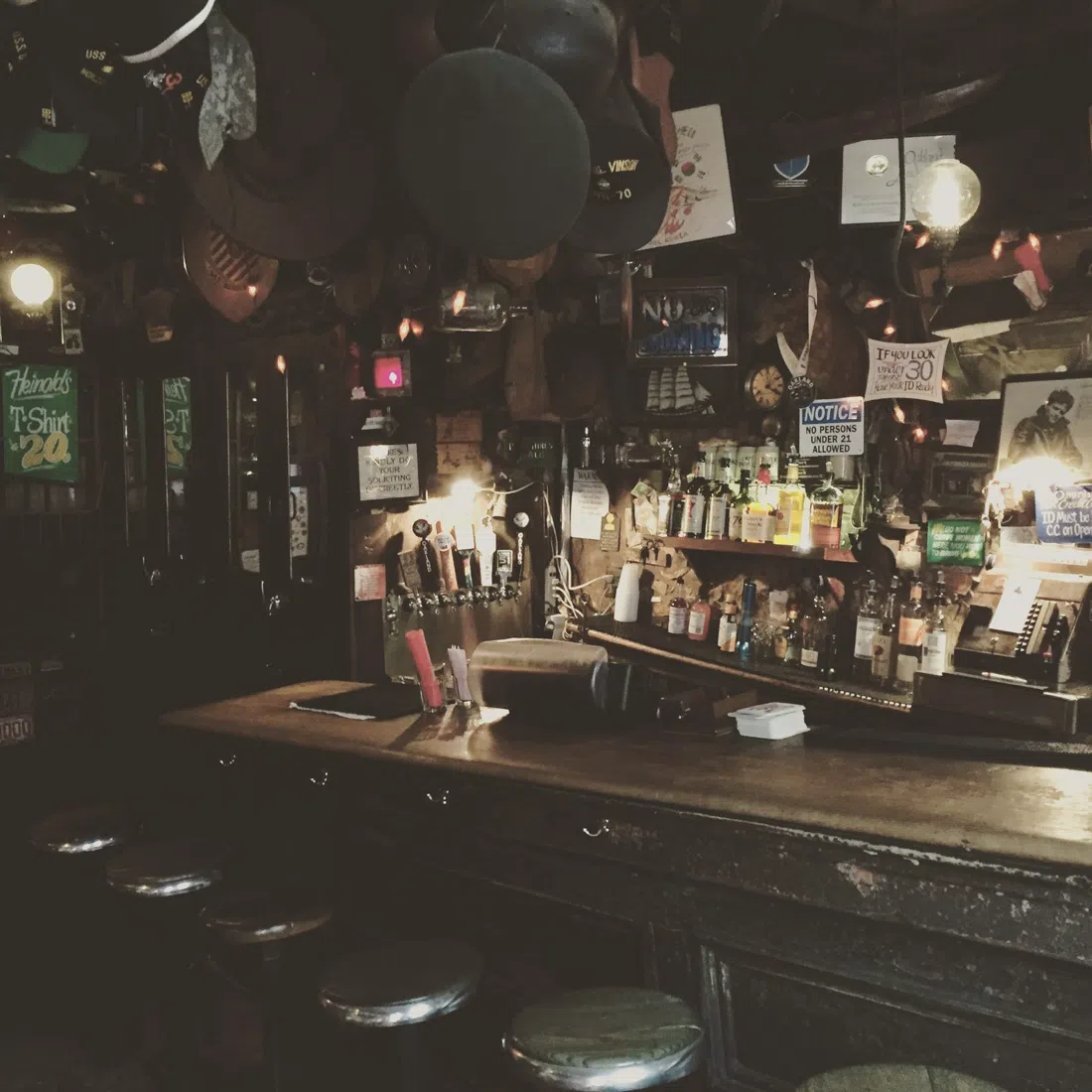
Size is the only catch, and it is a serious one. This is a one-room bar that holds a handful of people at a time. Send a large group in waves of four or five, or leave it off the itinerary entirely; turning up with twelve people will ruin it for everyone already inside, including you.
The wharf that became a market hall
Walk back east and you hit the Ferry Building Marketplace (the Embarcadero, at the foot of Market Street), open daily 07:00 to 20:00, free to enter, individual merchant hours varying. It is the hinge of the whole waterfront: it stands on the same engineered fill and seawall that finally swallowed the abandoned fleet, and it has been restored twice, in 2003 and again in 2024.
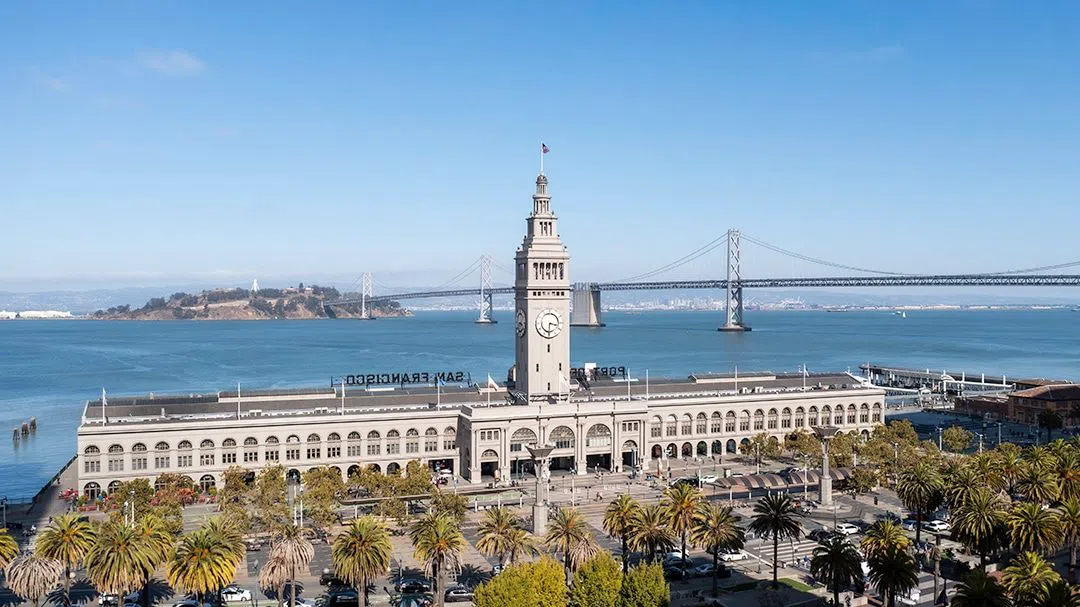
It is designed for crowds, which makes it the one stop on this route where a group of fifteen causes nobody any difficulty. Use it as a start or an end. As an end it is better: you can eat, buy coffee, and stand on the bay side looking at water that was, a few blocks behind you, once also water.
A cargo ship you can climb down into
SS Jeremiah O'Brien (Pier 35, on the Embarcadero north of the Ferry Building) needs a correction first. Check the pier number. Most guidebooks and a lot of websites still say Pier 45. The ship moved after the 2020 Pier 45 fire and is now permanently leased at Pier 35. People still walk to the wrong pier every week.
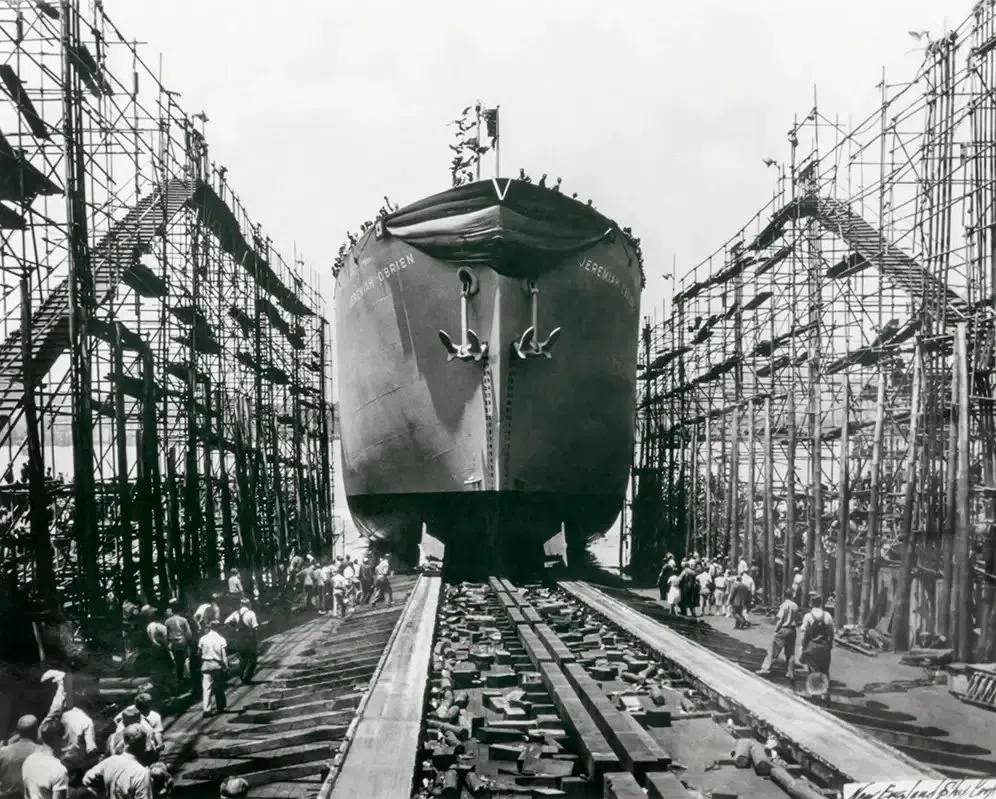
She opens daily 10:00 to 16:00, tickets are sold at the dockside booth, and adult entry is around $20. Group tours, private charters and the annual bay cruises tied to Fleet Week and the Seamen's Memorial are all available, the cruises at considerably higher prices and with dates fixed months out.
She is a Liberty ship from the Second World War, not a Gold Rush vessel, and I would not pretend otherwise. She earns her place because she is the last fully operational one of her kind, and because going down the ladders into the engine room answers the question the buried hulls cannot: what a working cargo ship actually is. The triple-expansion steam engine is enormous, oily and still runs. It is hot down there, the ladders are steep and vertical, and anyone with bad knees should stay on deck without embarrassment.
The museum that has lost its fleet
San Francisco Maritime National Historical Park — Maritime Museum (Aquatic Park Bathhouse) (Aquatic Park, at the western end of Fisherman's Wharf) is free, walk-in, and open Wednesday to Sunday, 10:00 to 16:00. The building alone is worth the detour, a 1939 streamline moderne bathhouse shaped like a ship, with WPA murals inside.
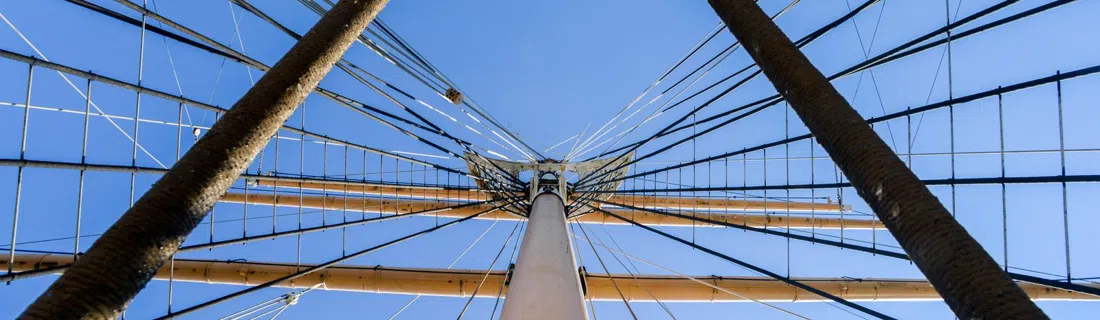
The honest part matters if you are planning a day around it. Hyde Street Pier is closed for a full rebuild, and the historic fleet (Balclutha, Eureka, C.A. Thayer, Hercules, Eppleton Hall) has been towed away to a former naval shipyard up the north bay. Those ships are open Saturday and Sunday, 12:00 to 16:00, and even that is subject to staffing. Do not promise anyone a walk on the deck of a square-rigger at the wharf this year. Check first, every time.
Inside the museum, the restored third floor with the murals only opens in two short timed windows, 10:30 to 12:00 and 14:30 to 15:30. Plan your arrival around one of them or you will miss the best room in the building. School and tour groups should call ahead; the ground floor absorbs numbers easily, the third floor does not.
The wrecks nobody buried
The buried ships are an act of engineering. The wrecks at Lands End Lookout Visitor Center (Point Lobos, the city's north-west corner, above the Golden Gate) are an act of weather. The visitor centre is free, open daily 09:00 to 17:00, walk-in, with a café and clean toilets, worth knowing, as there is nothing else out there.
From the coastal trail below it, at low water, the ribs of the tanker Lyman Stewart, lost in 1922, along with the SS Ohioan and the Frank Buck, break the surface. This is entirely tide-dependent and there is no way around that. Check a tide table before you go and aim for a low or minus tide; at high water you will see a lovely view of the strait and no ships at all. Never commit a group to this without checking the tide first, and keep everyone on the trail: the rocks below are slick, the surf is not a beach surf, and people have died there.
For why those wrecks happened, carry on to Fort Point National Historic Site (the Presidio, directly under the southern anchorage of the bridge). Entry is free. The interior generally opens Friday to Monday, roughly 09:00 or 10:00 to 17:00, and is closed Tuesday to Thursday on the reduced schedule, with more days added in summer. Confirm before bringing a group, because a closed fort is a long way to walk for a locked door.
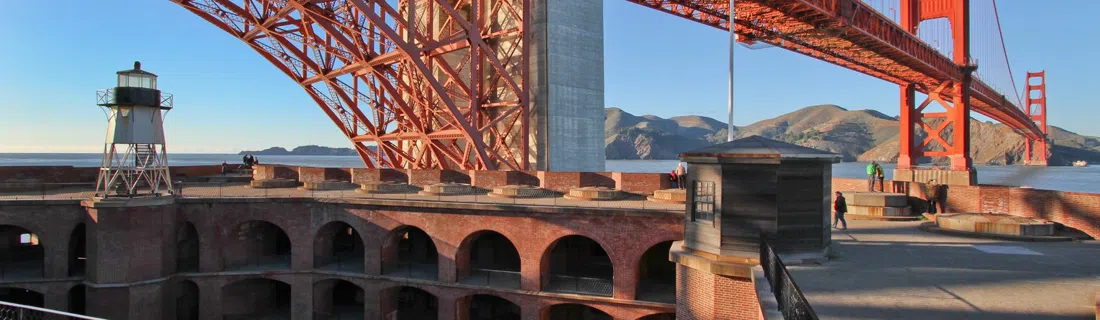
The fort was begun in 1853 with Gold Rush money, to guard a harbour that had suddenly become worth guarding. Standing on the brickwork with the strait running past at speed, fog coming through the gap and the swell stacking up, you get the other half of the explanation: the fleet in the mud downtown was the lucky half. Plenty never got past the Gate at all.
Out on the water
Alcatraz Island (Alcatraz City Cruises) (departing Pier 33, on the Embarcadero) is the only authorised operator, and that is worth repeating here, because a lot of unofficial sellers imply otherwise. Tickets are released ninety days out and sell out. A day tour is around $45 for an adult, the night tour $50 to $55, behind-the-scenes versions $70 to $95. Groups are handled separately by City Experiences and in summer need booking months ahead.
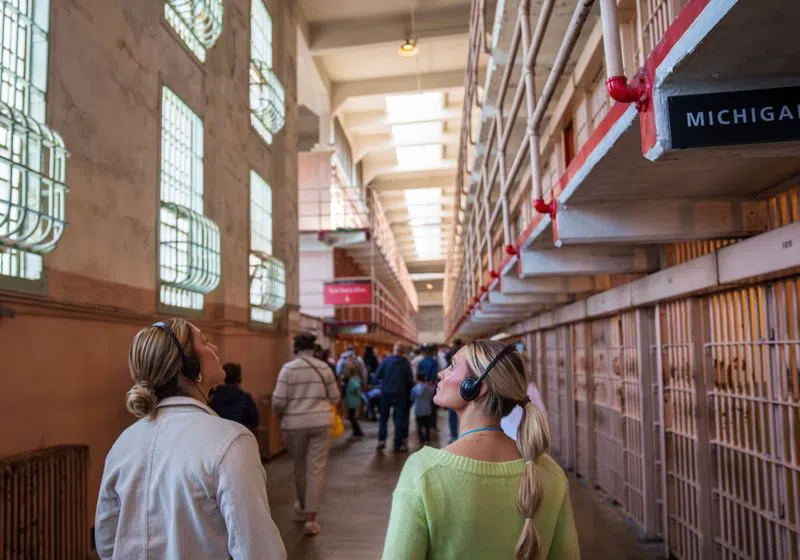
It belongs on this route for two reasons that have nothing to do with the prison. The Arkansas, later the Old Ship Saloon, first fetched up on the rocks off this island. And the island carries the West Coast's first lighthouse, lit for exactly the traffic that caused all of this.
The best stop of the lot, if the dates work, is Call of the Sea — brigantine Matthew Turner (sailing from the Bay Model dock on the north side of the bay, a ferry and a short walk from the city). She is a wooden sailing ship, built on the far shore in the traditional way and launched in 2017. Public sunset and themed sails run on scheduled Fridays and weekends, around $99 for an adult and $49 for under-twelves for two and a half hours; the nonprofit also runs private and school charters, which is the right call for any group over about eight.
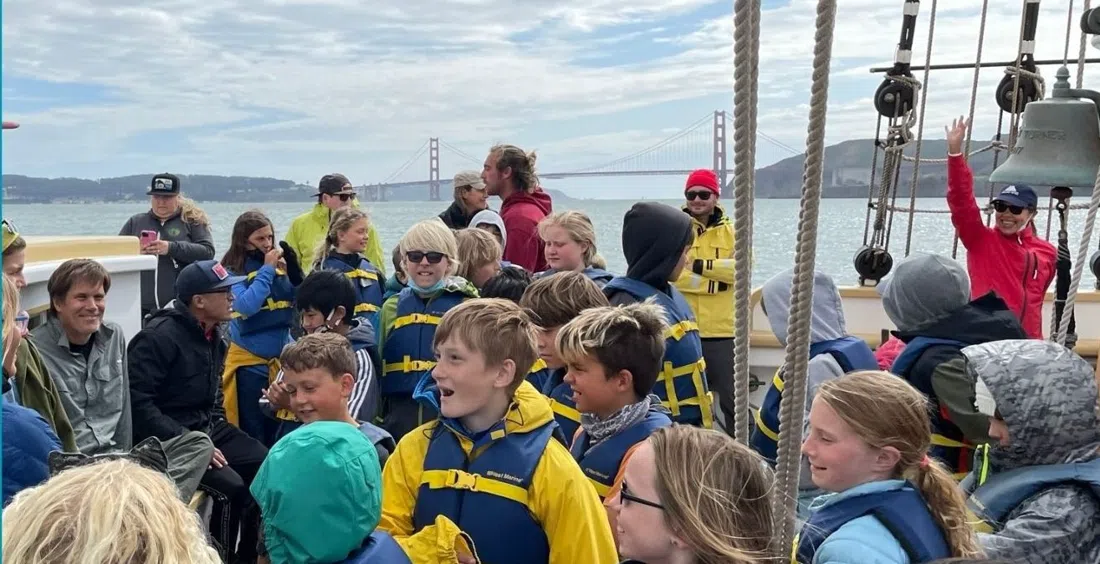
Sails are date-specific, so check the calendar before you build a day around it. And it is the only way to feel what the hulls now under the Financial District did for a living: the heel, the noise, the sheer amount of rope and labour involved in moving cargo before engines. Half an hour of that explains the abandonment better than any plaque.
Eating where the boom started
Finish at Tadich Grill (California Street, Financial District), which began in 1849 as a coffee-and-grilled-fish tent on Long Wharf, serving the crews of the ships that were about to be abandoned. It is California's oldest continuously running restaurant and the direct culinary descendant of everything above.
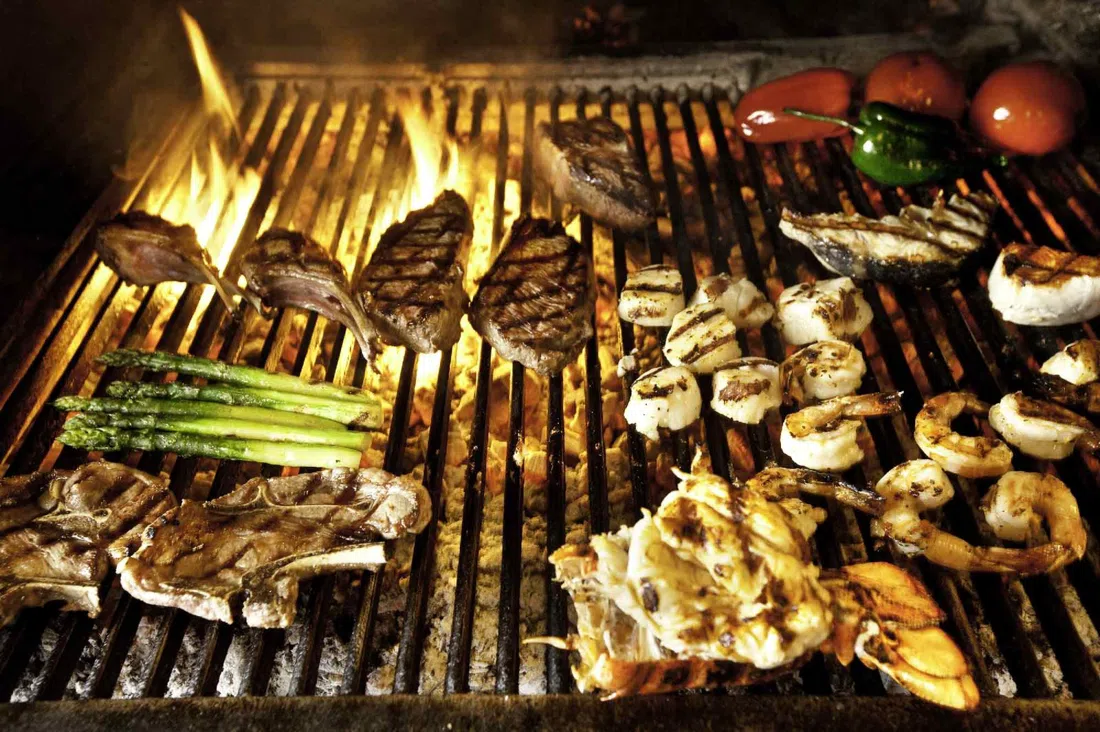
It now takes reservations, which is new and worth using at peak times. The booths suit small groups, larger parties need arranging in advance, and the local move is still to walk in and take a stool at the counter, where the turnover is fast and the waiters have opinions. Mains run roughly $30 to $55. Order the grilled fish plainly. The kitchen is at its best when it is doing the thing it has done since the tent.
Practical notes
The downtown core (redwoods, mint museum, saloon, Tadich, Ferry Building) is a flat two kilometres and needs about three hours with stops. Montgomery Street station puts you in the middle of it; the Embarcadero end is served by its own station and by the historic F-line streetcars, which are slow, charming and fine for the run up to Pier 33 and Pier 35. The Powell-Hyde cable car drops at Aquatic Park for the Maritime Museum. Lands End and Fort Point are separate half-days on separate sides of the city, best reached by the Geary buses and the Presidio services respectively.
On money: everything genuinely free here is free, meaning the redwood park, the mint museum, the Maritime Museum, Lands End, Fort Point, and walking into the Ferry Building. Budget around $20 for the Liberty ship, $45 and up for the island, $99 for a public sail, and $50 to $80 a head for dinner with a drink. Cards work everywhere, including the small saloons; cash is a courtesy for tips, not a necessity.
On timing: check the tide table before Lands End, the calendar before the tall ship, and the pier number before the Liberty ship. Book the island ninety days out. Avoid planning anything on a Monday to Wednesday downtown, because the mint museum and the Maritime Museum are both shut for at least part of that window.
On where to stay: the Financial District and Jackson Square put you on top of the buried fleet and empty out at weekends, which makes rates soft and the streets quiet; the wharf end is busier and better for families. Compare both on the San Francisco hotel search before you fix a base, and weight it toward whichever end of the waterfront you plan to start from.